Women Artists in Post-Revolutionary Mexico
The second module of this exhibit focuses on Mexican women artists working during the decades in which post-revolutionary muralism established the dominant model of revolutionary art. In the 1920s, mural painting was promoted as the central artistic form of the new state. Large-scale commissions in schools and official buildings were entrusted exclusively to male artists, and women were excluded from the official mural commissions that gave Mexican muralism its institutional visibility and prestige.
Painting on canvas remained an important medium, but muralist manifestos presented large-scale public painting as the primary vehicle of revolutionary art. Women artists worked mainly in easel painting because access to major mural commissions in official buildings was effectively closed to them. Some, such as Aurora Reyes, did execute murals in educational or union settings. In 1936, Reyes painted Attack on Rural Teachers (Atentado a las maestras rurales) at the Centro Escolar Revolución, often regarded as the first mural painted by a Mexican woman. Yet works such as Reyes’s stood outside the federal commissions through which muralism acquired its highest visibility and prestige within the official cultural project of post-revolutionary Mexico.
The limits of this access became especially clear in 1945, when María Izquierdo was officially commissioned to paint a mural in a public building, becoming the first Mexican woman to receive such a commission from the state. The project was later revoked under pressure from Diego Rivera and David Alfaro Siqueiros. Izquierdo publicly protested the decision, declaring that “it is a crime to be a talented woman.” The cancellation of this mural illustrates the barriers women faced in accessing the most prestigious and symbolically charged forms of state-sponsored art.
María Izquierdo was a prolific artist, holding over twenty solo exhibitions and producing an estimated five hundred paintings. She was also the first Mexican woman to exhibit her work in the United States. During her 1930 exhibition at the Art Center in New York, she became involved with members of the Delphic Society, a space frequented by Theosophists, artists, and nationalists. Influenced by the Russian esoteric author Peter Ouspensky and his theories of the “fourth dimension,” Izquierdo explored higher planes of perception and consciousness in her paintings. These ideas shaped her symbolic portrayals of women under celestial forces, often in scenes where male figures appear as controlling presences, and allowed her to merge spiritual exploration with a critical reflection on gendered power relations.
Cordelia Urueta was mentored in her youth by Gerardo Murillo, known as Dr. Atl, a central figure in Mexican muralism. During her stay in New York in 1930, she encountered Theosophical ideas that would later inform her artistic development. In her early metaphysical self-portraits, this interest in inner transformation appears through figuration, gesture, and a concentrated treatment of color. Over time, it led her toward abstraction, where color and form became the primary means of articulating interior experience.
Sofía Bassi, a later contemporary of Leonora Carrington and Remedios Varo, shared their fascination with esoteric and surrealist themes, though her work was more deeply rooted in alchemical symbolism. Her paintings frequently depict spectral figures, labyrinthine castles, and egg-shaped vessels drifting through otherworldly landscapes. Her life was marked by a five-year imprisonment following the death of her son-in-law, a period during which she redefined her artistic practice as a form of alchemy. One of her most enigmatic works is the Ovosarcófago (Ovosarcophagus), an egg-shaped sculptural coffin on which she worked for ten years and in which she was eventually laid to rest.
Izquierdo, Urueta, and Bassi demonstrate that esoteric ideas played a significant role in post-revolutionary Mexican art beyond the most visible state-sponsored mural projects. Their careers also make clear how gender shaped access to institutional recognition, even as women artists made decisive contributions to modern Mexican visual culture. In recent years, their work has received increasing scholarly and curatorial attention, prompting renewed consideration of their place in the history of Mexican art.
-
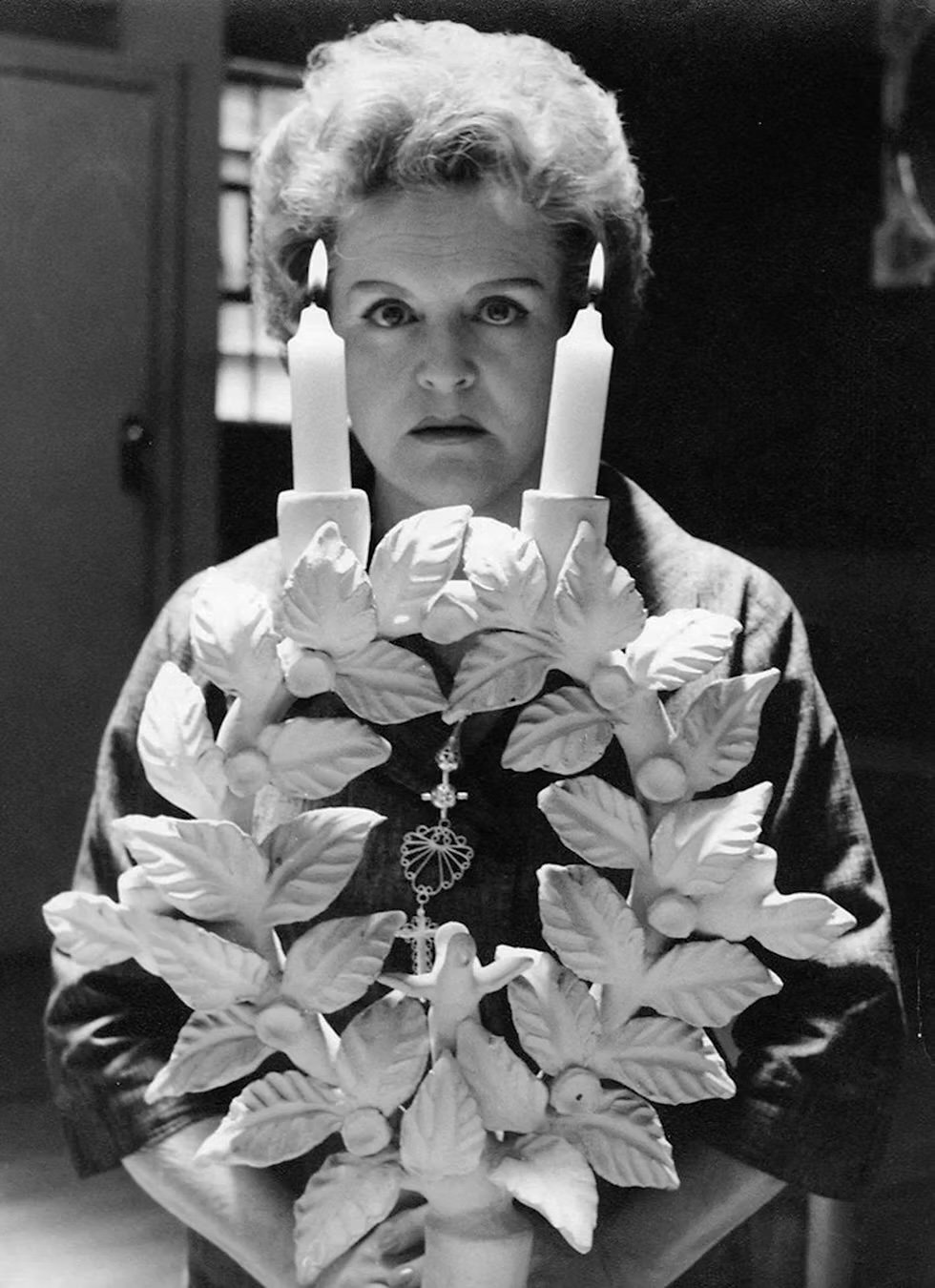
Cordelia Urueta
(1908–1995) Mexican Painter
(Portrait by Kati Horna) -

Maria Izquierdo
(1902–1955) Mexican Painter
-
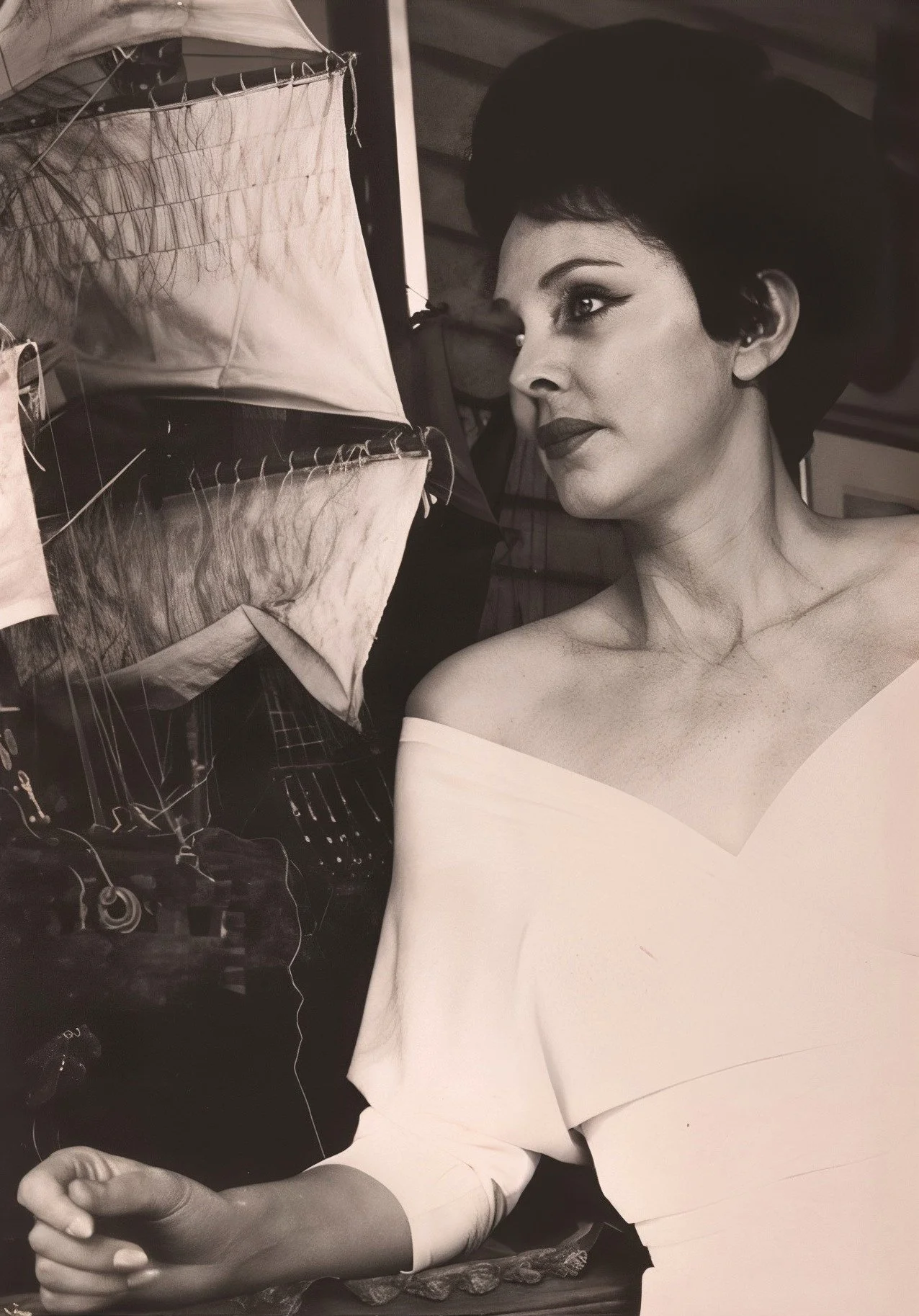
Sofía Bassi
(1913-1998) Mexican Painter and Writer
(Portrait by Kati Horna)